Downtown Miami in 2026
Is Downtown Miami the Right Place for You to Move Into or Invest?
With everything changing in Downtown Miami right now, is this actually the right place for you to move into, or to invest? Will the properties and real estate here increase in value as all this development plays out?
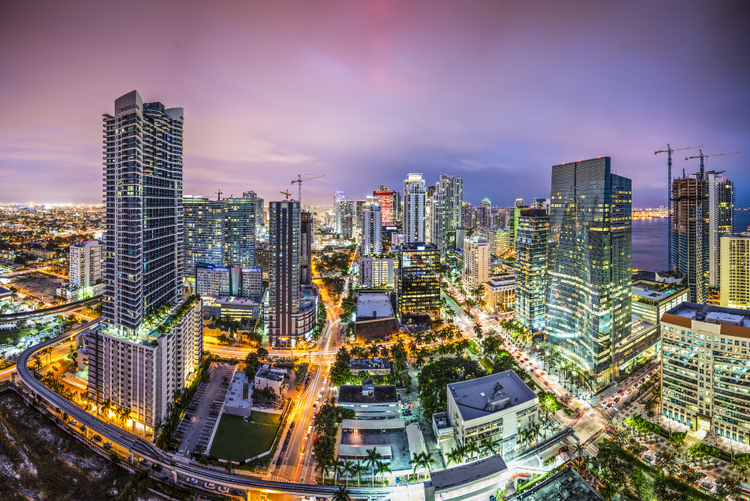
This neighborhood is where business, entertainment, and culture all come together. It's a dynamic urban city with a rich history and a diverse population, and right now it's going through one of the biggest transformations in its history.
A Neighborhood With 19th-Century Roots
Downtown Miami is actually one of the oldest neighborhoods in the city, dating back to the 19th century, when it served as the nucleus of commerce. It wasn't until Henry Flagler's Florida East Coast Railway arrived that the city's fate took a dramatic turn.
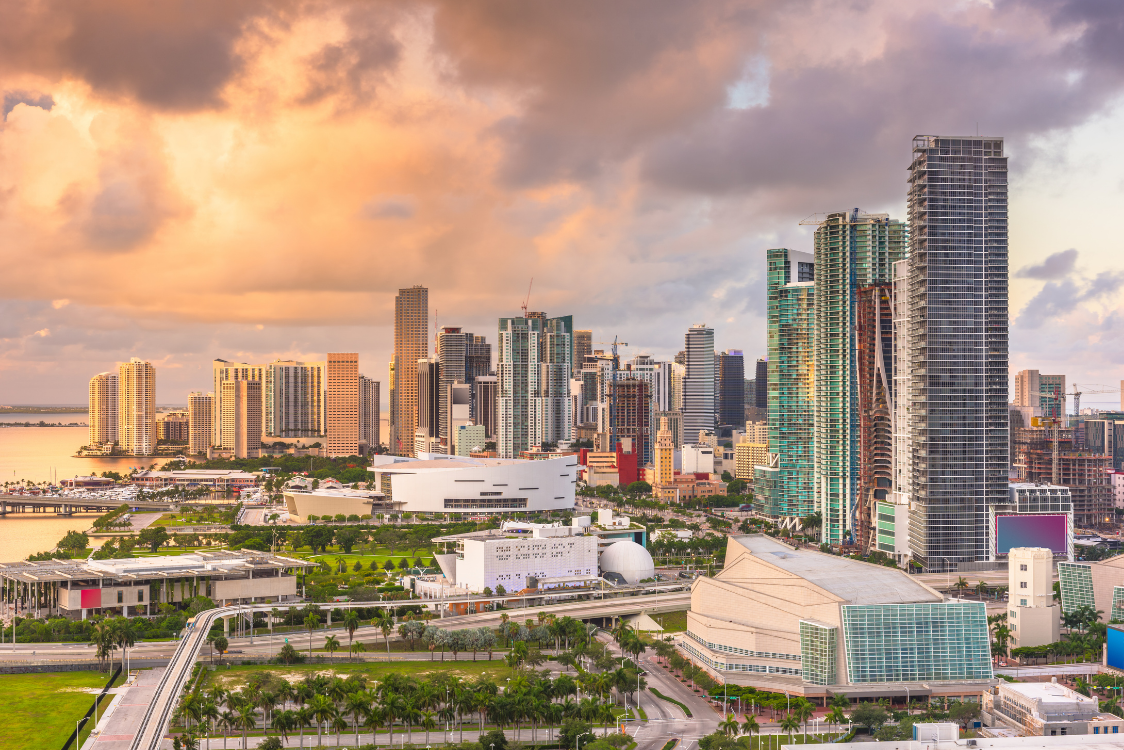
Today, you'll see a mix of antique buildings with architecture from the 1900s standing alongside ultra-luxury towers like the 1000 Museum, with Waldorf Astoria Residences coming soon. That building will be Miami's tallest tower and the city's first supertall skyscraper, which is going to reshape the entire downtown skyline once it's finished. It's a striking contrast to walk a few blocks and go from buildings that have stood since the early 1900s to a skyline that's about to include the tallest structure in the city, but that contrast is exactly what defines Downtown Miami right now: a neighborhood holding onto its earliest commercial roots while simultaneously building its next chapter directly on top of them.
There's a lot to do here: culture, music festivals, restaurants. But the main landmarks sit right between Biscayne Boulevard and the bay. Museum Park, Bayfront Park, Bayside Marketplace, and the Kaseya Center are all within walking distance of each other, which means a single afternoon downtown can move from a museum visit to a waterfront park to shopping to a live event without ever needing to drive between stops.
Transportation: The Most Accessible Neighborhood in Florida
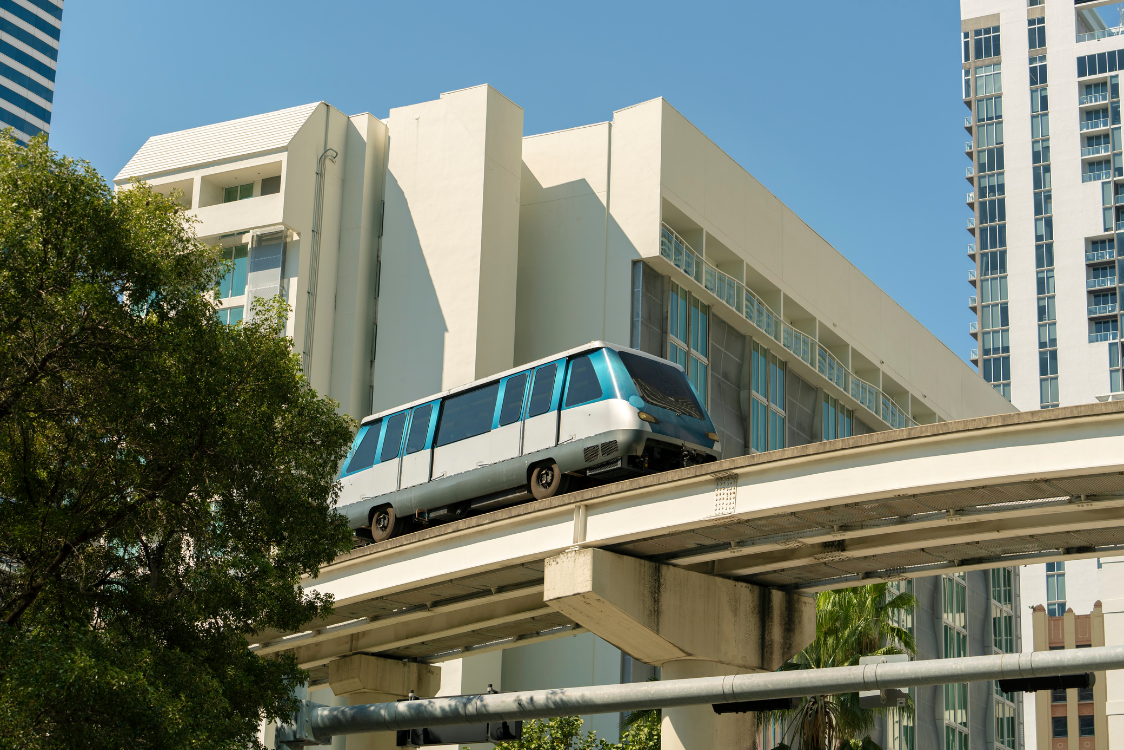
Downtown is genuinely the most accessible neighborhood in the entire state of Florida, and it's not close. Between Metrorail, Metrobus, the Metromover, Tri-Rail, the trolley, and Brightline, you have more ways to get around from here than almost anywhere else in Miami.
You can go south to Coconut Grove, out to the airport, north to Fort Lauderdale, Boca Raton, or West Palm Beach on the Tri-Rail, and now, with Brightline, all the way to Orlando without driving at all. On top of that, you have bike rentals, pedestrian-friendly pathways, and easy access to I-95 from several points throughout the neighborhood.
Picture living downtown and being able to hop on Brightline for a day trip to Orlando, or take the Metromover to dinner in Brickell, without ever needing to find parking. That's a genuinely different kind of convenience than most Miami neighborhoods offer, and it's worth weighing seriously if a car-light lifestyle matters to you. A lot of buyers moving to Miami from cities like New York or Chicago assume they'll need a car no matter where they land. Downtown is one of the few neighborhoods in the entire region where that assumption doesn't automatically hold.
That accessibility also plays directly into how this neighborhood functions for both residents and investors. If you're looking at a rental property here, tenants who want to skip car ownership altogether have a genuinely workable option, which widens your pool of potential renters compared to neighborhoods that are effectively car-dependent.
Miami Worldcenter: The Largest Urban Development in the Country
Miami Worldcenter is the project to watch right now. It's the largest urban development in the United States, designed so residents can live, play, and stay all within the same few blocks. The plan combines office, retail, hospitality, entertainment, and residential components in one area.
The area is still under construction, but it's already bringing in name retailers like Lululemon and Sephora, which is already open, along with restaurant options, sports bars, and bowling, giving people who live there plenty to do while also drawing in more tourism, which helps the broader economy. Some of the buildings taking shape here include the Paramount building, Miami World Tower, and the Legacy Hotel and Residences.
What makes Miami Worldcenter worth paying attention to is the scale of it. This isn't one building or one block. It's an entire live-play-stay ecosystem being built out block by block, and once enough of it is finished, it changes the character of everything around it, not just the development itself. For buyers considering a unit nearby, that kind of large-scale investment from major developers is usually a signal worth factoring into a long-term hold decision.
Flagler Street: A Beautification Project in Progress
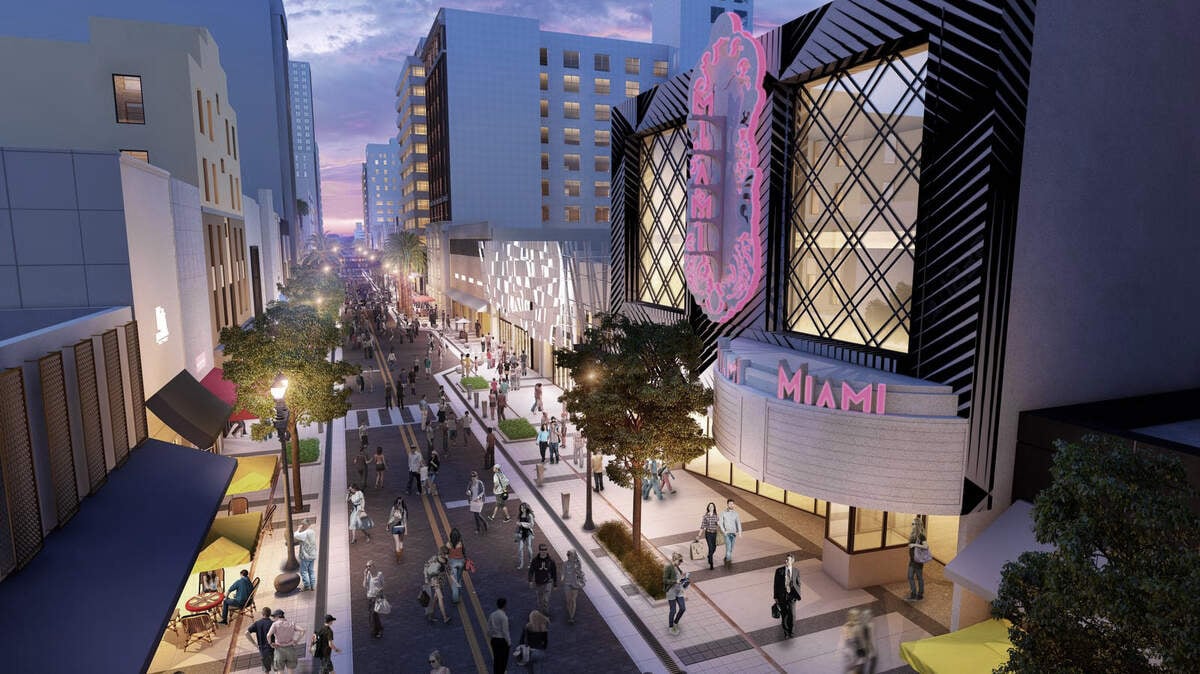
Flagler Street is in the middle of its own transformation. There's a beautification project underway, and while it isn't finished yet, you can already see the barricades and construction reshaping the street. The goal is to welcome businesses and residents to live, work, and play in the same area. It's not just the city investing in this corridor either. Major real estate investors are putting hundreds of millions of dollars into commercial and residential space here.
It's worth being honest about what that means in practice right now: if you walk down Flagler Street today, you're going to see an active construction zone, not a finished streetscape. That's not a reason to avoid the area. It's a reason to understand the timeline you're buying into. Some buyers want the finished product; others want to get in while the investment is still in motion, understanding that the payoff plays out over the next several years rather than immediately.
What This Means for You: The Numbers
These stats reflect pricing as of August 2026, so keep that timing in mind when weighing them against current listings.
One-bedroom units:
- Median listing price: $499,000
- Median closed sale price, past 6 months: $427,000
Two-bedroom units:
- Median listing price: $742,000
- Median closed sale price, past 6 months: $660,000
Here's the plain-language read: there's a real gap between what sellers are asking and what units are actually closing for in both bedroom counts, which is worth factoring in whether you're buying or pricing a sale. On the one-bedroom side, the gap between the $499,000 median list and the $427,000 median closed sale is over $70,000. On two-bedrooms, the gap between $742,000 listed and $660,000 closed runs even wider in dollar terms. Take that with a grain of salt rather than assuming every listing negotiates down by exactly that amount. It reflects the blended average across a wide mix of buildings, from brand-new towers to decades-old properties, not a single predictable discount you can apply to any one unit.
Downtown Miami also has a wide range of building types, from ultra-luxury towers to genuinely older buildings, and that range is exactly what makes this a strong opportunity for investment. Whether you're thinking about flipping, renovating, or holding long-term, there are opportunities across a wide range of price points here.
For investors specifically, the older buildings downtown are worth a second look precisely because the neighborhood's value story is still being written. A dated unit in a well-located older tower, bought at today's prices and renovated ahead of the neighborhood's continued build-out, is a different play than buying into a brand-new ultra-luxury tower at the top of the market. Neither is automatically the better move. It depends on your timeline, your budget, and how much renovation work you're willing to take on.
If you already own downtown and you're deciding whether to sell, the gap between listing and closed prices is worth sitting with before you set your number. It depends on the building and the unit type, and it's worth a conversation before you commit to a price.
The Honest Take
Downtown Miami is still very much in transition. Parts of it, like Flagler Street, are mid-construction and not yet the finished version of what's coming. That means buying or investing here right now means buying into a trajectory, not a finished product. For some buyers that's exactly the appeal. For others, it's worth knowing upfront that the neighborhood you'd be moving into today isn't the neighborhood it'll be in a few years.
The same is true of the building stock itself. Living next to a construction site, or in an older building surrounded by new development, comes with real trade-offs day to day: noise, scaffolding, and years before the surrounding blocks fully catch up to the vision being built around them. If you're someone who wants a neighborhood that already feels finished and settled, Downtown right now may test your patience. If you're comfortable with a few years of visible change in exchange for getting in ahead of it, the calculus looks different.
Personally, I believe Downtown is the new Brickell when it comes to growth, economics, and real estate opportunity. That's not a guarantee of where prices go, but it's a reasonable read on the direction this neighborhood is heading given everything currently being built. Brickell went through a similar stretch of visible construction and shifting identity before it became the neighborhood it is today, and Downtown appears to be earlier in that same kind of arc.
Is Downtown Miami Right for You?
Whether you're looking to buy, sell, rent, or invest here or in any other neighborhood in Miami, please do not hesitate to reach out. All of my information is below. Send me a text, send me an email, give me a call, and I'll be more than happy to help you make the move.
And if you're three months, six months, a year, or two years out from being ready, that's fine too. It's still worth a conversation now, especially in a neighborhood that's changing as quickly as this one. Waiting a year in a stable neighborhood usually means minor shifts. Waiting a year in Downtown Miami right now could mean an entirely different set of buildings, prices, and amenities than what exists today, which is exactly why it's worth staying in the loop even if you're not ready to act yet.
Stefania Mogollon
Miami & South Florida Real Estate Agent
📱 305.600.9602 (call or text)
📧 [email protected]
🌐 Miamicondoshouses.com
Sign up: Newsletter & Market Updates
Ready to Discuss Your Real Estate Goals? Book a Consultation
Check out this article next