Selling a Miami Condo? What to Know Before You List
Thinking About Selling Your Miami Condo? Here's What It Really Takes
If you own a condominium unit in Miami and you've been thinking about selling, you've probably wondered what the process actually looks like from the day you list to the day you get your check. Is it just a contract, a deposit, and a closing date? Well, the reality is that selling a condo in Miami has more moving parts than most owners expect.
Condos come with a second set of variables that single-family homes don't: the building's financial health, reserves, upcoming assessments, recertification, association approval, and lender requirements that can make or break a deal. Many sales fall apart not because the buyer changed their mind, but because something about the building surfaced at the very end.
Right now, the Miami condo market favors buyers. That means sellers need to be more competitive, more prepared, and more on top of every step than they would in a market where offers arrive the first weekend. In this guide, I'll walk you through the 10 steps to get your Miami condo sold, from pricing and presentation to disclosures, qualifying your buyer, inspections, financing, and the final walkthrough.
Step 1: Price It Competitively (and Know What You're Pricing)
The first step is price, price, and price. Don't overprice it, and don't underprice it. Price it competitively.
That sounds simple, but with Miami condos it's anything but. Condo values can vary dramatically from building to building, even when the buildings sit right next to each other, and from unit to unit inside the same building.
Take the Aston Martin Residences in Downtown Miami as an example. The penthouse there is listed at $59 million, while the building right next door has units available for around half a million dollars. Same street, same waterfront, same skyline, and a price gap that tells you everything about how specific condo pricing has to be.
What does that mean for you as a seller? Looking at the "average price in the area" isn't enough. You need to understand exactly what you're pricing:
- The view. Bay, ocean, city, or pool deck views price very differently.
- The floor. Higher floors typically carry a premium, but the specific line and exposure matter too.
- The finishes. A renovated kitchen and updated bathrooms put your unit in a different comparison set than an original-condition unit.
- The building itself. Amenities, age, reserves, and reputation all show up in what buyers are willing to pay.
Pricing is one of several levers we can pull together, alongside condition, marketing, exposure, and showings. But in a buyer-favored market, it's the lever buyers notice first. When two units are almost the same and one is priced lower, which one do you think buyers see first?
Step 2: Organize, Repair, and Make a Strong First Impression
First impressions matter, and it's a little like dating. If a buyer doesn't like what they see at first sight, they may take much longer to decide, or they may move on to the next unit on their list.
Before you list, take care of the basics:
- Declutter. Buyers need to picture their own life in the space, not yours.
- Repaint if the walls are scuffed or the colors are very personal.
- Make the necessary repairs so small issues don't become negotiation points later.
- Organize closets, counters, and storage so the unit feels as spacious as it is.
Picture a buyer walking in on a Saturday morning. The blinds are open, the bay is catching the light, the counters are clear, and the living room feels like a place they could come home to after work. That's the feeling you want every showing to create.
If Your Unit Is Tenant-Occupied
Many Miami condos are tenant-occupied, and that adds a layer to showings. If the apartment isn't showing as well as it could, consider talking to your tenant and offering an incentive so the unit presents better. Some ideas:
- Two free cleaning services a month while the unit is on the market
- A discount on the rent during the listing period
- Other accommodations that make showings easier on their schedule
Think about it from the tenant's side. Having strangers walk through your home, with nothing in it for you, while the owner is essentially preparing to move you out, isn't a pleasant place to be. A good relationship with your tenant makes a real difference in how your property shows, and in how smoothly the whole sale goes.
Step 3: Know the Ins and Outs of Your Building's Finances
This step is one of the most important, because not knowing this information is one of the biggest reasons condo deals fall apart.
Before you accept an offer, you should be able to answer these questions:
- What is the building's financial status?
- Are there enough reserves?
- What percentage of units are owner-occupied?
- Is there an assessment in place or coming up?
- Is the building's recertification coming up?
Why does this matter so much? Because all of these factors affect how your buyer can obtain financing. Lenders look closely at a building's reserves, owner-occupancy ratio, and pending assessments. When these details come out at the very end of the process, the buyer's loan can stall or collapse, and meanwhile you may have turned away other buyers who were a better fit for your building.
Knowing your building's financials also gives you an advantage at the negotiating table. Say your building has an assessment. You have options:
- Pay it in full before closing, so the buyer takes on a clean slate.
- Pay half and offer a seller credit for the rest.
- Structure a different arrangement that works for both sides.
Even if the assessment hasn't been approved yet but is on the horizon, knowing about it ahead of time lets you negotiate from a position of clarity instead of scrambling when it surfaces.
Step 4: Market It Well and Make Showings Easy
Your condo could be the best unit in the entire city, but if nobody sees it, what good is it?
Whether you're selling on your own or with an experienced agent, marketing should go far beyond putting the listing on the MLS and waiting. That means:
- Top-quality photography that shows the light, the layout, and the view accurately.
- Top-quality videography so out-of-town buyers can get a real feel for the space.
- Broad exposure so your property reaches the largest possible audience, presented in the best possible way.
- A strategy behind every choice, down to which image appears first on your listing.
Responsiveness Sells Condos
After the marketing comes communication. Miami attracts a lot of buyers who are in town for a short window, whether they're relocating, shopping for a second home, or investing from abroad. If a buyer is here just for the weekend and the answer is "let's wait until next week," they won't be here next week.
The ideal is flexibility on showings and quick responses to every inquiry. Fast, organized scheduling is often what makes the difference between a property that sells and a property that sits.
Step 5: Get Your Disclosures Right
As a seller, you have specific obligations when it comes to disclosing certain information to your buyer. If you're working with a real estate agent, consult with them. If you're selling on your own, please consult with an attorney.
Failing to provide the required disclosures can have serious consequences after closing. Selling a condo isn't just "contract, sale, money in the bank." There's a process, and there are specific requirements in Florida and in Miami that you need to follow. Make sure all of your paperwork is in order from the start.
Step 6: Qualify Your Buyer (Price Isn't Everything)
A buyer may hand you a pre-approval letter, but that alone doesn't mean they can close on your condo. The strongest offer on paper isn't always the strongest buyer.
The Buyer's Own Finances
To evaluate how financially strong a buyer really is, you want to understand:
- Debt-to-income ratio (DTI). How much of their monthly income already goes to existing debt, which affects how much a lender will approve.
- Credit score. This influences both their loan approval and, in some buildings, their association approval.
- Where the down payment is. Some buyers keep their down payment overseas, and moving that money to the United States can take time. Others have it in stocks. If the market drops between signing the contract and closing, they may not want to sell those stocks anymore, and suddenly the down payment is in question.
Your Building's Requirements
The second piece is your building. Your association may have its own requirements to approve a buyer, such as a minimum credit score. Some buyers get through their loan approval and much of the process, only to discover late in the game that the building has a credit score minimum they don't meet.
It's also important to know whether your building is non-warrantable. If it is, not every loan program will work. A buyer planning to put down a small down payment through a specific financing program may find that the program doesn't apply to your building, and the loan options that do apply require a larger down payment.
What does this mean for you? Before you enter into a contract, make sure the buyer is truly strong financially, and that their financing matches what your building allows. It saves you weeks, sometimes months, of lost time.
Step 7: Negotiate and Accept the Right Offer
Again, price isn't everything. Before you evaluate any offer, get clear on where you stand and what you need.
- Do you live in the unit and need extra time to stay after closing?
- Do you have a tenant with a lease in place?
- How flexible is the buyer on timing, terms, and contingencies?
Consider the whole offer, not only the number. A slightly lower offer from a well-qualified, flexible buyer may be a better outcome than a higher offer that comes with financing risk or a timeline that doesn't work for you.
This is also the time to disclose any assessments or major repairs the building needs. The buyer is going to find out sooner or later, so it's better to put it on the table early and see whether they're willing to work with you. Addressing it up front gives you the best chance of reaching mutually agreed terms, and of actually getting to the closing table.
Step 8: The Initial Deposit and the Inspection Period
Once you and the buyer sign a contract agreeing to all terms and the price, the buyer provides an initial deposit to an escrow or title agency. This is a neutral third party that holds the money until closing. If the contract is cancelled, the escrow or title agency disburses the funds according to the terms of the contract.
How the Inspection Period Works
At the same time, there's a previously agreed inspection period, often 7, 10, or 15 days, depending on what you negotiated. During that window, the buyer has the option to hire an engineer to inspect the unit at their own expense. It isn't mandatory, although it's something I always recommend to my buyers.
Here's why it matters. The standard contract in Miami, Florida is an "as is" contract. That means the buyer commits to purchasing the property exactly as they saw it. The inspection is their chance to understand what they're actually walking into.
If something comes up during the inspection that the buyer isn't comfortable with, whether it's minor or major, they may have the option to cancel and get their deposit back from the escrow or title agency, depending on the wording of the contract.
Your Options as a Seller
You are not obligated to agree to repairs or to offer a credit. That said, if the requested repairs are reasonable, or a credit is something you're comfortable offering, meeting the buyer at a middle point can be to your benefit so the deal moves forward. If there's no agreement within the inspection period, the buyer can cancel the contract and receive their deposit back.
This is not a hard yes or a hard no. It depends on the issue, the cost, your timeline, and how strong the rest of the deal is.
Step 9: Financing and the Condo Application
Securing financing and completing the condo application happen at the same time, and both are the buyer's responsibility. The contract gives the buyer a set time frame to secure their loan, complete the association application, and get approved.
That doesn't mean you, or your agent, can sit back. Buyers sometimes take too long to send documents to their lender, are slow to respond, or need to update paperwork along the way. If the process drags, the property can't close on time, and you start fielding extension requests.
Stay on top of the timeline. Consistent, proactive follow-up during this stage is what keeps a condo deal on track.
Step 10: The Final Walkthrough and Closing Day
Once the buyer has the bank's commitment letter and the condo association's approval, you're ready to close.
Before you get your check, the buyer does a final walkthrough. They come to the unit to confirm everything is exactly as agreed in the contract: every fixture and every item they saw during their visits and that's included in the contract should still be there.
The final walkthrough needs to happen very close to closing, usually the same day or the day before. Once everything checks out, you're ready to close, whether in person or virtually.
And that's it. That's how you sell your Miami condo in 10 steps
What This Means for You
If You Own a Condo in Miami and You're Thinking About Selling
If you own a condo in Miami, whether in Brickell, Downtown, Edgewater, or anywhere across South Florida, the biggest takeaway is preparation. In a market that favors buyers, the sellers who close are the ones who price with precision, present the unit well, and know their building's financials before the first offer arrives.
Have you looked at what your condo would actually sell for today? Even if you're a year or two away from listing, it's worth knowing where your unit stands, what your building's reserves and assessments look like, and which buyers your building can realistically serve.
If You're an Investor Holding a Tenant-Occupied Unit
Investors have an extra layer to plan for. Your tenant's lease, the tenant's cooperation during showings, and your timeline for delivering the unit all shape which offers make sense. Start the conversation with your tenant early, consider incentives that make showings easier, and factor the lease terms into how you evaluate every offer.
If You're a Buyer Reading This
Everything in this guide works in reverse, too. Understanding the building's finances, the association's approval requirements, and whether the building is warrantable before you make an offer can save you from a deal that stalls at the finish line.
The Honest Summary
The good: Sellers who prepare well can still sell successfully in a buyer-favored market. Knowing your building's financials gives you real negotiating flexibility, whether that's paying an assessment before closing or offering a credit. Strong marketing and fast, flexible showings help your unit stand out from the competition.
The trade-offs: Condos carry more variables than single-family homes, and many of them sit outside your direct control, including the building's reserves, owner-occupancy ratio, assessments, and association requirements. Buyers have more leverage right now, which may mean more negotiation around price, repairs, and credits. And a buyer's pre-approval letter doesn't guarantee they'll close, so qualifying your buyer carefully takes extra time up front.
Ready to Talk About Selling Your Miami Condo?
If you're looking to buy, sell, rent, or invest in a Miami condo or anywhere in South Florida, please do not hesitate to reach out to me. All of my information is below. Send me a text, send me an email, give me a call, and I'll be more than happy to help you make the move.
And if you're not ready yet, that's completely fine. Whether you're three months, six months, a year, or two years away, it's good to have a conversation. I can put together a market analysis for your unit, walk you through a market update for your building or neighborhood, or explain the recertification program and the new condo law in Miami and what it could mean for your sale. Let's have a conversation. No pressure, no commitment.
Stefania Mogollon
Miami & South Florida Real Estate Agent
📱 305.600.9602 (call or text)
📧 [email protected]
🌐 Miamicondoshouses.com
Sign up: Newsletter & Market Updates
Ready to Discuss Your Real Estate Goals? Book a Consultation
Check out this article next
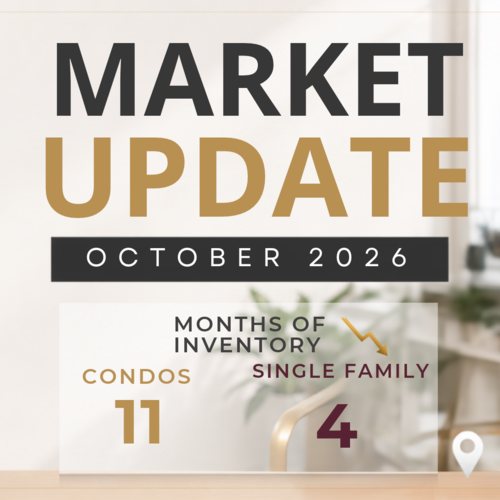
Miami-Dade Real Estate Market Report: October 2026
Is Miami one real estate market right now, or two? If you look at the August 2026 numbers for Miami-Dade County, condos and single family…
Read Article