When Is the Best Time to Sell Your Home in Miami?
A seller's guide to Miami's peak real estate seasons, who is buying when, and how to time your listing in Miami and South Florida.
Thinking about selling your home in Miami, but not sure when to list it?
It's one of the first questions I hear from homeowners, and it's a smart one. The moment you put your property on the market affects how many buyers see it, how many offers you receive, and ultimately how much return you get on what is, for most people, one of the biggest investments of their life.
In a lot of the country, the answer is fairly simple: list in the warmer months, when buyers come out of hibernation. Miami doesn't work that way. Our weather is pleasant almost all year, which means a home here can show well in January, April, or October. So what actually drives buyers into the market here, and when?
In this post, I'll walk you through what the Miami Realtors study shows about when homes are listed and when they sell, the different types of buyers who shop at different times of the year, and the other factors that matter just as much as the calendar. By the end, you'll have a clearer sense of when the right window might be for your home.
Why timing matters when you sell
Every seller wants two things: the most money possible for the property, and a sale that doesn't drag on for months. Those two goals are connected.
When a home sits on the market for a long time, buyers start to wonder. Is it overpriced? Is something wrong with it? Why hasn't anyone bought it yet? Days on market send a signal, and a long stretch can quietly weaken your negotiating position even if nothing is wrong with the property at all.
Listing at the right time is one of the levers we can pull to avoid that. It works alongside pricing, condition, presentation, photography, and marketing. Timing on its own won't sell a home, but listing when the most qualified buyers are actively shopping gives every other part of your strategy a better chance to work.
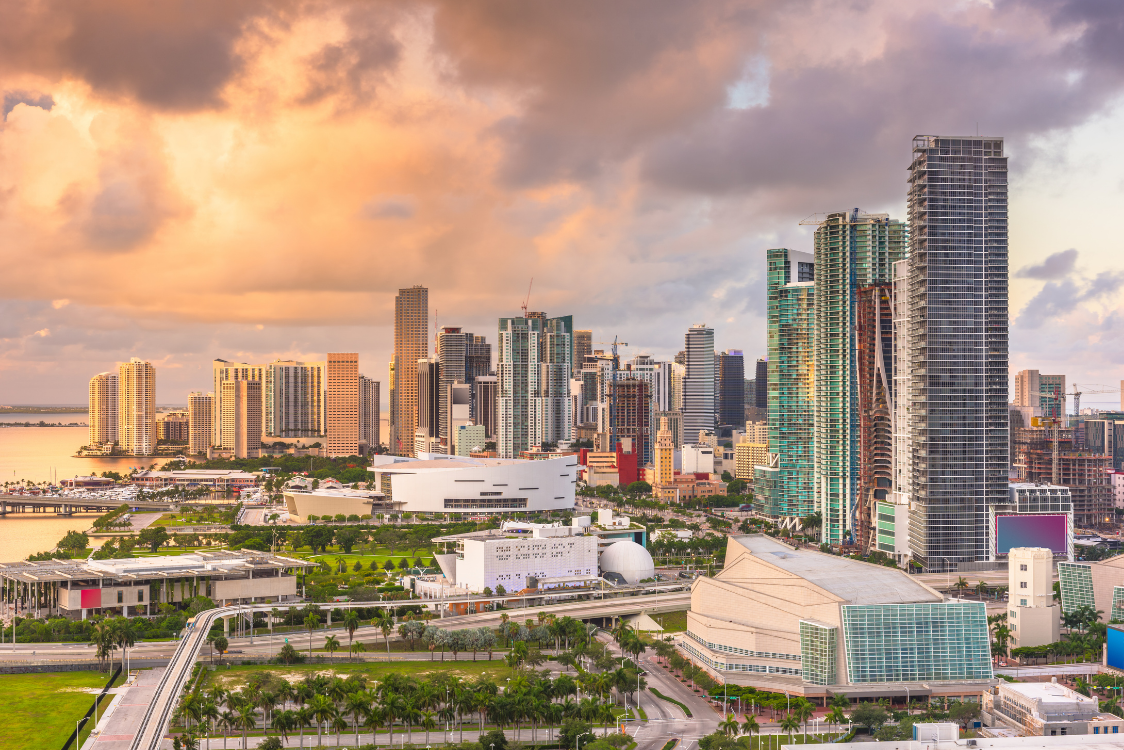
Why Miami doesn't follow the usual real estate calendar
In states with four distinct seasons, the rhythm of the market is easy to read. Snow and freezing temperatures keep buyers home in winter, and activity picks up as the weather warms. Spring and summer become the natural selling season.
In Miami, we have the opposite problem, and it's a good problem to have. Because the weather is warm and bright nearly year-round, your home will almost always show well. The yard is green, the pool is usable, and the light through the windows looks just as good in February as it does in June. That gives Miami sellers more flexibility than sellers in most other markets.
But flexibility doesn't mean every month is equal. Buyer activity in Miami still rises and falls throughout the year. The difference is that here, the pattern isn't driven by weather at home. It's driven by who is coming to Miami, and why.
What the Miami Realtors study shows
Miami Realtors released a study looking at when properties in Florida are most often listed and when they most often sell. Here's what the pattern looks like and what it means for you.
When homes actually sell
The first part of the study looks at home sales, meaning when properties actually close. This is an important distinction. Closing on a property usually takes anywhere from one to three months after the home goes under contract, so the closing date is not the same as the listing date. To understand when a home was likely listed, you have to look back at least a couple of months from when it closed.
Here's the pattern:
- Sales start to pick up at the beginning of the year, with the peak building around February.
- Activity continues through the spring and then starts to slow down around summertime.
- Sales pick up again around October, as Miami heads into its cooler months.
What this means in plain language: if closings are climbing in February, many of those homes were listed and went under contract toward the end of the previous year, right at the start of our winter season. In other words, Miami's winter is our high season. It's the reverse of what you would see in northern states, and it's the stretch of the year when the most buyers are here and actively shopping.
When homes are listed
The second part of the study looks at new listings, meaning when sellers put their properties on the market.
- Listings peak around January and February.
- From there, new listings gradually decline as the year moves toward summer.
This lines up with the sales pattern. Most Miami sellers put their homes on the market in the winter months, and both listings and sales slow down in the summertime.
Take this with a grain of salt
The Miami Realtors study was built on older data, so I don't want you to treat it as a perfect snapshot of today's market. That said, when I pulled more recent statistics to compare, the pattern looked very similar. Activity slows down in the summer months and picks up again as the weather cools. There's also a dip around November before things climb back up, which makes sense when you remember that homes closing in the new year were typically listed two to three months earlier.
The takeaway: the broad seasonal rhythm in Miami has been consistent. The specifics of your neighborhood and property type, however, can look quite different from the big picture, which is exactly why the next section matters.

What this means for you as a seller
If you're thinking about selling, winter is the season when the largest pool of buyers is typically in the market. Listing in the lead-up to that window, or early in it, puts your home in front of more people, and more buyers can mean more showings and more offers.
But "more buyers" also comes with a trade-off. If listings peak in January and February, that means more homes are competing for attention at the same time. A property that is well priced, well prepared, and well marketed stands out in that crowd. A property that isn't can get lost in it.
It depends: who is your buyer?
Here's where the real answer comes in. The best time to sell your home depends on what kind of property you own, where it is, and who is most likely to buy it. Different buyers shop on very different calendars.
Out-of-town buyers and snowbirds
During winter, Miami fills up with locals and visitors alike. A large share of the buyers active in this season are coming from out of town, many of them from the northern states, whether they're looking to relocate for good or to have a seasonal home here.
What are they buying? Mostly condominiums and properties close to the beach or with ocean views. They want a home that takes them away from the lifestyle they have back home.
Picture a buyer who left Chicago that morning with snow on the ground. That afternoon, they're standing on your balcony in the sun, looking out at the water, and imagining their mornings here with a coffee in hand. That's the emotional moment winter creates, and it's why a condo near the beach or with a water view is often best positioned to list heading into our high season.
If you own a condo near the beach or a property with ocean views, winter is likely your strongest window.
Families and the school calendar
If you own a larger home in a highly desired school district, your most likely buyer is a family with children, and families tend to plan around the school year.
These buyers often start looking in the winter or spring, with the goal of closing in the summer so they can move in and settle before the new school year begins. Their timeline is a little different from the out-of-town winter buyer. For a family home, listing in winter or spring lines up with when these buyers are searching, and gives them enough runway to close before school starts.
If you own a single-family home in a sought-after school zone, think about your listing in terms of the family calendar, not just the tourist calendar.
Buyers relocating for work (and remote workers)
Then there are buyers moving to Miami for a new job, along with the growing number of people who can now work remotely and have chosen to make South Florida home. Not every one of them follows the same pattern, but many prefer to be settled around the start of the calendar year.
That often means they begin looking at properties during the summertime, aim to close during the winter, and move in right around the turn of the year. So while summer is generally a slower season in Miami, it isn't a dead season. For homes that appeal to relocating professionals, summer can bring serious, motivated buyers who are working toward a specific deadline.
The factors that matter as much as the calendar
Seasonality is one piece of the picture. When I help a seller decide when to list, I also look at several other factors, because any one of them can shift the ideal timing.
Market conditions
Is inventory rising or tight? Are homes similar to yours selling quickly, or sitting? The broader market can make a winter listing more competitive than usual, or make an off-season listing stand out more than you'd expect.
Interest rates
Rates influence how much buyers can afford and how motivated they feel to act. A shift in rates can bring buyers off the sidelines or keep them there, regardless of the season.
Buyer demand for your type of property
Demand for condos and demand for single-family homes don't always move together. The right timing for a beachside condo may not be the right timing for a family home near top schools.
Your very specific local market
This is the one I emphasize most. The Miami market can change from one neighborhood to the next. A high-rise condo in Brickell, with walkable dining and a cosmopolitan crowd, attracts a different buyer than a Mediterranean-style single-family home on a tree-lined street in Coral Gables near top-rated schools. Even within the same neighborhood, two buildings can behave differently. Big-picture seasonal trends are a starting point, not a final answer.
Your personal circumstances
Finally, your own life matters. Where are you moving next? Do you need to sell before you buy? Is there a date you're working toward? The "best" time on paper isn't the best time for you if it doesn't match your plans.
Putting it together: a simple way to think about your timing
This isn't a hard yes or a hard no for any month of the year. It depends on your property, your buyer, and your goals. But here's a general way to frame it:
- Condos near the beach or with ocean views: heading into and during winter tends to align with the out-of-town and seasonal buyers most likely to want them.
- Larger homes in desirable school districts: winter and spring line up with families searching so they can close by summer.
- Homes that appeal to relocating professionals and remote workers: summer can bring motivated buyers aiming to settle in by the turn of the year.
- Any property: pricing, preparation, and marketing matter in every season, and they matter even more when competition is high.
The honest summary
The good: Miami sellers have more flexibility than sellers almost anywhere else in the country. Your home can show well nearly any time of year, and there are real buyers shopping in every season, from winter snowbirds to spring families to summer relocators.
The trade-offs: The busiest season also brings the most competition from other listings. The slower season brings fewer buyers overall, which means the ones who are shopping need to find your home and fall for it. And no seasonal trend replaces the fundamentals. An overpriced or poorly presented home will struggle in any month, while a well-priced, well-marketed home gives itself the best chance in every month.
Start tracking your home's value now
If you're thinking about selling anytime soon, or even a year or two down the road, one of the best things you can do is keep track of what your home is worth. I'm happy to send you monthly or quarterly value updates, depending on how soon you're thinking of making a move.
And even if you decide not to sell with me, that's completely fine. I'll still share tips on how to properly prepare and market your home or condominium, so that whenever you're ready, you're walking in with full information. So many factors go into how fast, how smoothly, and how profitably a home sells, and timing, pricing, and marketing all work best when you plan them together.
If you've been wondering what your home could sell for today, or whether now is the right time, let's have a conversation. No pressure, no commitment, just a real look at where your home stands.
Ready to make the move?
If you're looking to buy, sell, rent, or invest anywhere in Miami or South Florida, please do not hesitate to reach out to me. All of my information is below. Send me a text, send me an email, give me a call, and I'll be more than happy to help you make the move.
And if you're three months, six months, a year, or even two years away from selling, it's still worth reaching out. Even if you're not ready to buy, sell, rent, or invest, it's good to have a conversation. The earlier we start, the better positioned you'll be when the timing is right.
Stefania Mogollon
Miami & South Florida Real Estate Agent
📱 305.600.9602 (call or text)
📧 [email protected]
🌐 Miamicondoshouses.com
Sign up: Newsletter & Market Updates
Ready to Discuss Your Real Estate Goals? Book a Consultation
Check out this article next
Selling Your Miami Home? 6 Mistakes That Cost Thousands
Are You Thinking About Selling Your Miami Home or Condo?
Read Article